


Industrial knives are precision-engineered cutting tools designed for use in machines and automated production lines.
Depending on the application, they vary in Thin blades are typically used for clean, low-friction cuts, while thicker knives provide durability and strength in tougher applications.
Cutting Edges
Industrial blades can have one or multiple cutting edges. Most applications use single or double-edged blades, depending on precision and durability requirements.
Grinding (One-sided vs Two-sided)
- Two-sided grinding → smoother, more versatile cutting
- One-sided grinding → higher precision and controlled cuts
Bevel Types
The bevel (cutting angle) determines how the blade performs:
- Fewer bevels → stronger edge → starkare egg
- More bevels → sharper, finer cuts → skarpare och finare snitt
The right balance depends on the material and process.
The choice of material directly impacts performance and lifespan.
Common materials include:
- Tool steel
- Stainless steel
- High-speed steel (HSS)
- Pulverstål
- Volframkarbid (Tungsten carbide)
- Powder steel
Circular Knives, Top Slitting Knives (Top Knives), Bottom Knives Crush Cutters & Perforating Knives, Serrated & Toothed Blades, Trapezoid Blades Pointed Blades, Granulator & Pelletizer Knives, Long Machine Knives, Industrial Razor Blades, Coatings for Better Performance
Circular knives are one of the most widely used blade types in industry. They are ideal for slitting and cutting continuous materials such as film, paper, foil, and textiles.
Key parameters:
- Outer diameter
- Inner diameter
- Thickness
- Edge geometry
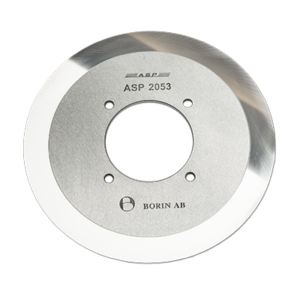
Crush cutting is a simple and robust cutting method where material is pressed against a hard surface.
Crushing always takes place against a hardened steel roller.
Perforating versions create tear lines in materials such as plastic bags or packaging Used for: thicker plastics rubber labels textiles
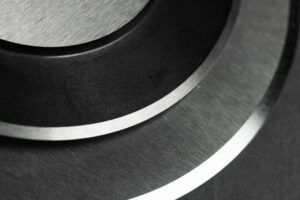
Serrated blades have a toothed edge and are ideal for materials that require multiple entry points.
Applications
- nonwoven materials
- textiles
- Tejp
- tapes
- Flexible materials
rapezoid blades are among the most commonly used blade types globally. They are often used in both industrial and manual cutting tools.
Pointed blades are used for precision cutting and surface-level operations.
Granulator knives are used in recycling processes to break down materials into smaller pieces.Pelletizer knives are used to cut processed material into pellets.
Key requirements:
- high dimensional accuracy
- balanced hardness
- durability under repeated stress
Important features:
- Abrasion resistance
- Accuracy
- The right hardness
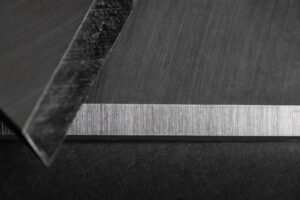
Long knives are used for cutting large or wide materials and can be manufactured in lengths of several meters.
Razor blades are used when a very clean cut is required with minimal friction.
Common types:
- 3-hole blades
- slotted blades
- injector blades
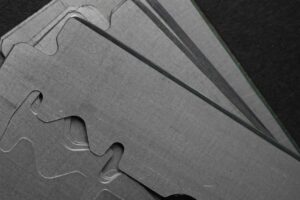
Blade coatings improve performance by enhancing:
- wear resistance
- friction reduction
- resistance to glue and debris
- lifespan
Vanliga beläggningar:
- TiN = Titanium Nitride Coating
TiCN = Titanium Carbon Nitride Coating
TiN and TiCN are used to protect the knives / blades from wear.
PTFE = (Teflon®) Non-stick coating
PTFE is used to reduce friction between, for example, the knife and the material being cut.
It is also used to prevent the material you are cutting from sticking to the blade or knife.
Selecting the correct industrial knife depends on:
material being cut
thickness and hardness
machine type
cutting speed
desired cut quality
Borin Machine Knives specializes in custom solutions tailored to specific production needs. They can manufacture knives based on: drawings, samples, existing part numbers.This ensures optimal performance and long-term reliability in your process.
 Polski